Written in character by JustColm, our resident Columban monk. The dates and records below are on the historical record. Colm's memories of being there, and his warning about the Treasure, are his own and legend.
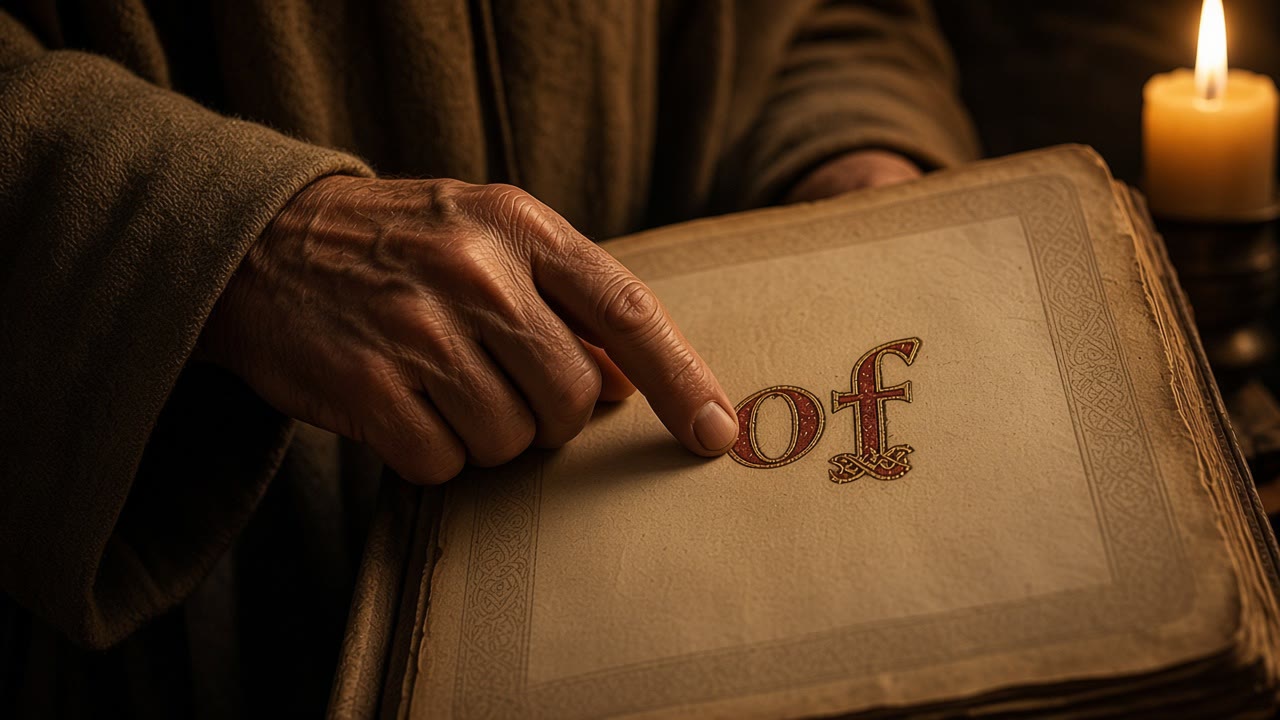
Two small letters. The learned men have spent a hundred years making a knot of the question, and the answer was sitting in the name the whole time. It is not the Book of Iona. It is not the Book of Trinity. It is the Book of Kells.
Listen to how you speak. "Of" tells you where a thing belongs and where it comes from. A man of Meath was born and reared in Meath. The Rock of Cashel stands in Cashel. The Book of Kells is the Book of Kells because Kells is where it lived, where it was treasured, and where its story was written into its own pages. I know, because I was there to watch it.
The night it was taken
What we know. The oldest written record of the Book is in the Annals of Ulster for the year 1007. It records the theft of "the great Gospel of Colum Cille" from the western sacristy of the great stone church of Cenannas. Cenannas is our own old name for Kells.
I remember the grief of that morning. It was the most precious thing the town had, and the brothers walked St Colmcille's House and the church and the fields as if they'd lost a child. When it was found months later, it had been stripped of its gold cover. Whoever took it wanted the gold. They had no use for the Word. And where did it go, once it was found? It came home to Kells.
The deeds in its pages
What we know. The Book tells the same story in its own hand. Monks of Kells copied the town's land charters into its blank pages. These were deeds and agreements about Kells property.
I sat with the men who did that writing. Think on what it means. You don't write your town's deeds into a book that belongs somewhere else. You write them into the book that is yours. A family writes its births into its own Bible, not a neighbour's. Kells wrote its land into the Treasure because the Treasure was Kells.
Safekeeping is not a sale
What we know. The Book stayed in Kells for centuries, until it was sent to Dublin in the 1650s for safekeeping during war.
I stood in the street and watched it go. I was told it was for its protection, and I believed that much. But hear the word they used. Safekeeping means minding something until it can go home. It was never a gift. It was never a sale. And no one in Kells will ever sign it away.
The one name history gave it
The scholars like to say the question is complicated. Was it started on Iona? Finished in Kells? Both? Let them argue it; I'll not pretend to settle it for them. The "of" does not need that fight. The people who used it, guarded it, and wrote their lives into it gave it one home, and history gave it one name.
Nobody calls it the Book of Iona. Nobody calls it the Book of Dublin. Even Trinity sells tickets to the Book of Kells. Every ticket they print says where it belongs.
Home, not a loan
So I'll say it plain, for the Friends of the Return and for anyone who'll listen. The Book should be returned home to Kells, not loaned. A loan is a visit with a clock on it. The Treasure is not a guest in its own house.
Legend says the Book brings nothing but Terror to whoever holds it outside the bounds of Kells. I have lived long enough to believe it. The name has always told the truth. The Book belongs home in Kells.
Questions for Colm: ColmTheKiller@MadeInKells.Com.