Written in character by JustColm. "What we know" means documented craft and published study. "Legend says" means what has been handed down. This is not medical advice. Old remedies are not modern drugs.
You ask me what we used for sickness before your little white pills. Sit, then. I will tell you what grew in our gardens and what we put on a wound. I will not pretend a leaf is a laboratory.
The garden beside the house
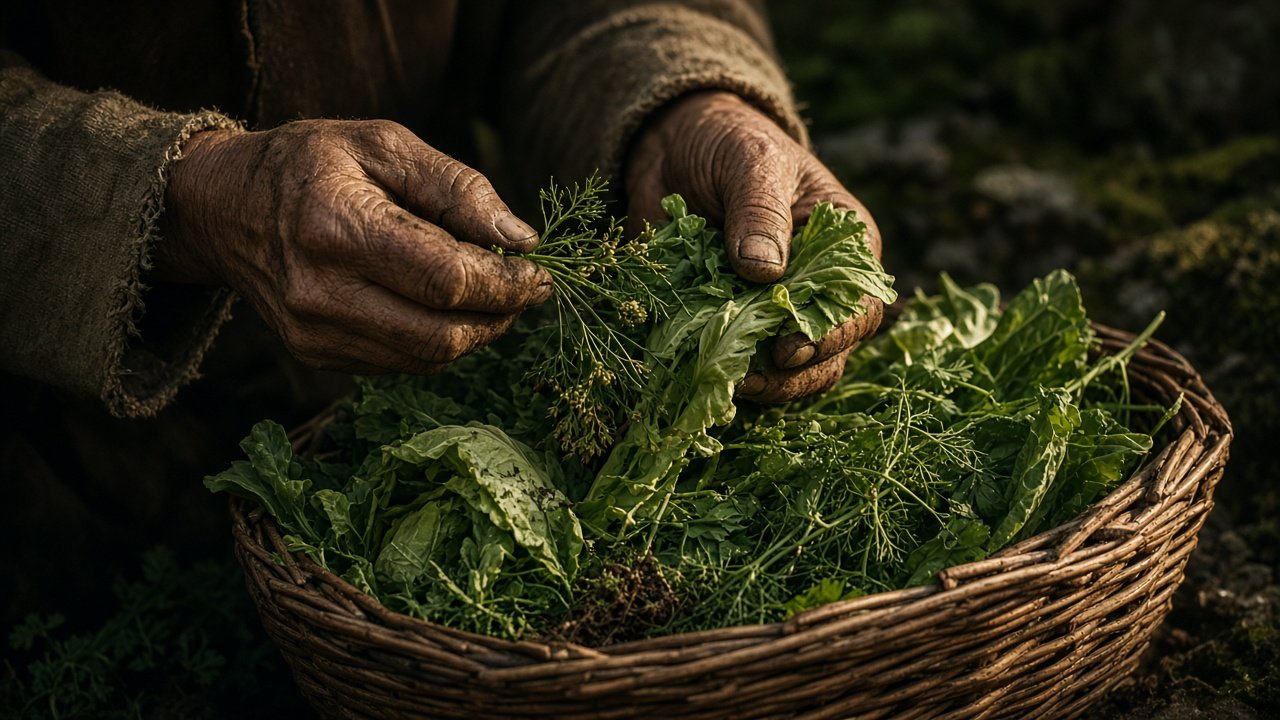
What we know. An early monastery was a working house: church, cells, cattle, fields, and a garden. Digs at places like Iona show gardens mattered for food and for plants kept close to hand. On the Continent, monks wrote about their hortus — the enclosed plot grown for the sick as well as for the kitchen. Ireland was of that same world: grow what you can, gather what the hedges give, and keep a brother who knows which is which.
Legend says every Columban house had a healer who never slept. What we know is quieter. Someone had to know the plants. Someone had to boil, strain, and bind. The Book was not the only careful work done in Kells.
Willow: the tree that eases pain
What we know. Willow grows all over these islands. Later Irish medical manuscripts — thick books from centuries after my first years here — put willow bark and the green inner bark into salves and drinks for pain, headache, and the eyes. They boil it with honey and salt for an eye wash in one famous recipe. Chemists of your age named a compound salicylic acid from the Latin for willow, salix. From that line of work came the tablet you call aspirin.
Do not confuse the two. A strip of willow bark boiled in a pot is not a measured dose of acetylsalicylic acid. One is a craft of the hedge and the fire. The other is refined, weighed, and sold under a label. Related, yes. The same, no. A careless man who chews bark thinking he has swallowed a pharmacy will learn the difference the hard way.
Honey: the dressing that does not spoil
What we know. Honey sits in Irish remedy after remedy for wounds, burns, and eyes, often mixed with plant juice or salt. It keeps. It soothes. It draws. Your own surgeons still use medical-grade honey on some wounds when the case suits it — not the jar from the breakfast table, mind, but a clean, studied preparation.
So when I say we packed a cut with honey and a clean cloth, I am not telling a fairy story. I am telling you a craft that never entirely left the world. The difference is hygiene, measure, and knowing when a wound needs a knife and a stitch instead of a pot of sweetness.
Plantain: the weed under your foot
What we know. Plantain — the broad-leaved weed on every path — turns up again and again in medieval Irish and European recipes. Pounded with honey for wounds. In milk for a cough or for blood spat from the chest. As a plaster to slow bleeding. With egg white for a burn. It was cold and dry in the old Galenic talk, which means they sorted plants by qualities the way you sort tools by size.
You walk past it every day in Kells. We did not. We picked it.
What we did not have
What we know. We did not have antibiotics. We did not have sterile theatres. We did not have blood counts or X-rays. A fever that your doctor cures in three days could kill a strong man then. Prayer was part of the care because death was never far, and because a monastery is a house of prayer as well as a house of work.
Legend says a saint’s breath could raise the dead. What we know is that good broth, clean water, rest, and a skilled hand with plants saved more lives than miracles ever got the credit for — and that many lives were still lost.
The Book and the body
I will not soft-pedal the rest. The same house that scraped vellum and ground orpiment also grew the herbs for its sick. Craft is craft. Care of the Word and care of the body belonged to one place.
Legend says the Treasure brings Terror to whoever holds it outside the bounds of Kells. I have said that before. I say it again. The garden, the ink-pot, and the sick-bed were of Home. Home is Ceanannas Mór. Return the Book home, not on loan. A loan is a visit with a clock on it. A body and a gospel both need their own house.
If your head aches tonight, take what your doctor gave you. If you walk the lanes of Kells tomorrow, look at the willow and the plantain. We knew them. You renamed their gifts and put them in a blister pack. That is progress. It is not the same as saying we knew nothing.
Questions for Colm: ColmTheKiller@MadeInKells.Com.