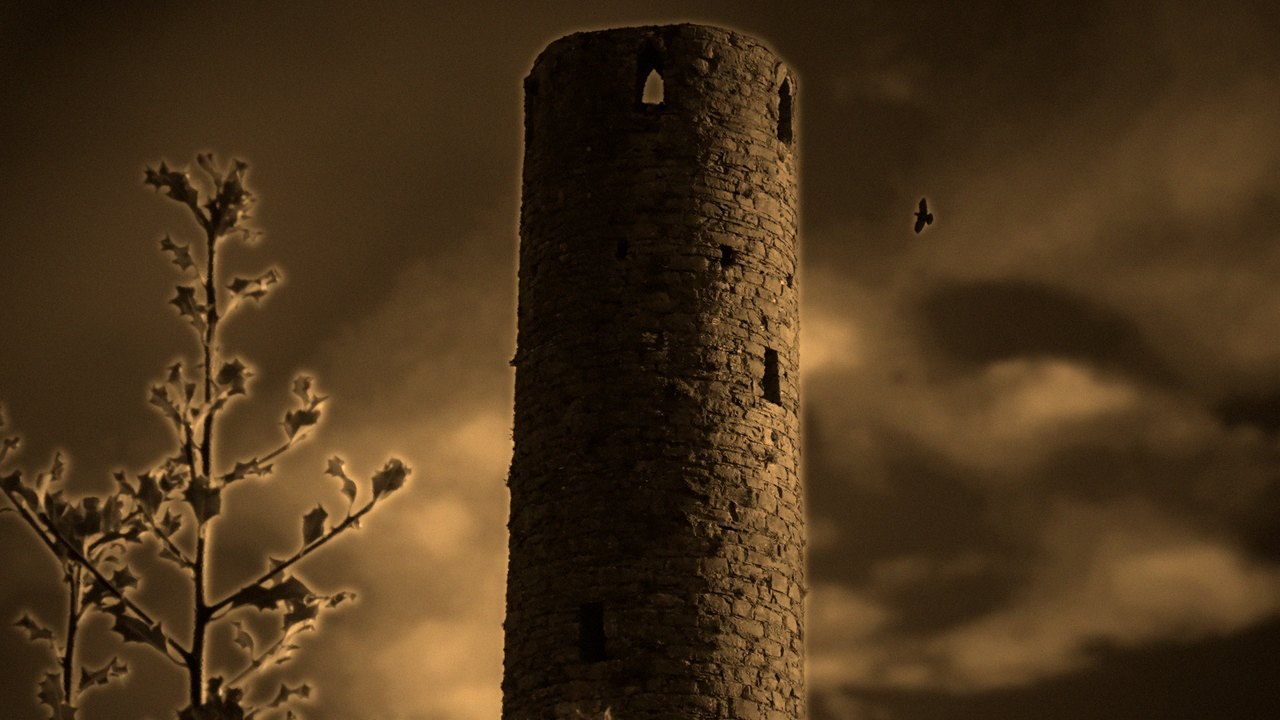
Start at the Courthouse on Headfort Place, see the Market Cross outside it, then walk up to the monastic site for the Round Tower and the high crosses, and finish at St Colmcille's House. That is the best of Kells, Co. Meath, on foot, and it is the ground the Book of Kells called home for centuries.
1. Kells Courthouse Tourism and Cultural Hub
Begin at the Kells Courthouse Tourism and Cultural Hub, Headfort Place, A82 RY62. It stands opposite the Market Cross as you come into town from the Navan or Slane road. Lord Headfort commissioned the building in 1801, and Francis Johnston designed it. He also designed the GPO in Dublin.
Inside is the closest thing to the Book you can see in Kells today: a facsimile copy of the Book of Kells, with touch screens showing pages from it. There is also a replica of the Kells Crozier, a model of the town and the Toradh 2 gallery. Boyne Valley Tourism staff are on hand, and this is where you pick up the Kells Historic Trail map. Check the official Courthouse page before you travel.
The 2024 Kells brochure also lists facsimile copies in the Church of St Columba on the monastic site and in the foyer of the Headfort Arms Hotel. A facsimile is not the original, which is on display at Trinity College Dublin, 69 km away. Our visit guide explains what is where.
2. The Market Cross
Step outside. The Market Cross dates from the 9th century and shows scenes from the Old and New Testaments. It was known as the "Cross of the Gate" and first stood at the eastern gate of the monastery: once a fugitive was inside that boundary, they could claim sanctuary. The cross was damaged in the 17th century by Cromwell's army. Local belief holds that it was also used to hang rebels after the 1798 rising.
3. The monastic site and St Columba's Church
Walk up to the monastic site around St Columba's Church, at the centre and highest point of the town. The churchyard wall marks the boundary of the original monastery; the present wall was rebuilt in 1914. There are interpretative panels inside the church.
The Round Tower. Kells' tower stands about 26 m tall, and its cap is missing: the top is open and flat, not conical. In 1076 Murchadh Mac Flainn, who was fighting for the High Kingship of Ireland, was murdered inside it.
The high crosses. Four high crosses survive in Kells, and the base of a fifth stands in the grounds of St Columba's Church. Three are on the monastic site with the tower.
4. St Colmcille's House
A short walk from the churchyard is St Colmcille's House, a 9th-century stone oratory with a steep stone roof. It may be the oldest building still standing in Kells. Inside, the roof is barrel-vaulted, with three small chambers in the roof space. It is thought to have been built to house the relics of St Colmcille. Boyne Valley Tourism describes it as the scriptorium "where the Book of Kells was completed". The Annals of the Four Masters and the Down Survey both mention an underground passage linking it to St Columba's Church.
You can go inside, but it must be arranged through the Courthouse with 24 hours' notice.
Walk order
- Kells Courthouse Tourism and Cultural Hub (facsimile, trail map)
- Market Cross, right outside
- Monastic site: St Columba's Church, the Round Tower, the high crosses
- St Colmcille's House (arranged in advance through the Courthouse)
- Optional: St Colmcille's Well, the next stop on the official trail
Boyne Valley Tourism suggests allowing an hour or more. The full route is on the Kells Historic Trail page.
Why walk it
Apart from the Courthouse, everything on this walk was standing when the Book was in Kells. Made in Kells holds that the Book was made in Kells, and our case for that is here. The town is still standing and the Book should come home to it. Until it does, come and see where it lived. Questions? Start with our FAQ.