Short answer: The church at Kells lay in ruins after 1641. In 1653 Charles Lambert, Governor of Kells, sent the Book to Dublin for safety. Henry Jones gave it to Trinity in 1661. It was not sold. It never came home.
That is why the Book of Kells is in Dublin and not in Kells. The leaves sit under glass at Trinity College Dublin, 69 km south of the town that named them. The campaign at MadeinKells.com exists because safekeeping is not a gift, and because Kells is still waiting for a return home, not a loan. No return has been agreed.
The Book left for safety, not for sale
After the rebellion of 1641 the church at Kells lay in ruins. A great gospel book in a wrecked church, in a town under wartime pressure, was in real danger. Around 1653 Charles Lambert, Earl of Cavan and Governor of Kells, sent the manuscript to Dublin in the interests of its safety. Every serious account of that move describes protection in a time of war. None describes a sale. None describes the people of Kells deciding to part with it.
Eight years later the Book was still in Dublin. In 1661, the year Henry Jones became Bishop of Meath, he gave the manuscript to Trinity College. Those two dates are not one event. Folding the gift into 1653 makes a wartime removal look like a settled transfer. It was not. What really happened in 1653 keeps the dates apart. The longer record is in How the Book of Kells ended up in Trinity: 1653 to 1661.
Safekeeping is not ownership
A governor moved the Book to protect it. A bishop later handed it to a college. At no point does the historical record show consent from the people of Kells. The town does not appear as a party that agreed to give the Book away.
Trinity College has cared for the manuscript for more than three and a half centuries. That care is real. It does not rewrite how the Book left. Safekeeping means minding something until it can go home. It does not mean the town that kept the Book for centuries lost its claim the day the manuscript went south. For how Kells talks about custody and care today, see Does Kells trust Trinity to mind the Book?.
What Kells is asking for
Made in Kells is asking for the Book to come home to Kells, permanently. Not a loan. Not a courtesy season while the glory stays in Dublin. A return home.
No return has been agreed. That fact matters as much as the history. The campaign is not pretending a deal exists. It is making the case that the wartime removal of 1653, and the gift of 1661, never settled the question of where the Book belongs. What would a return look like sets out conservation, a proper facility, and what the town gains. The FAQ has the short answers.
The leaves are in Dublin. The name points to Kells.
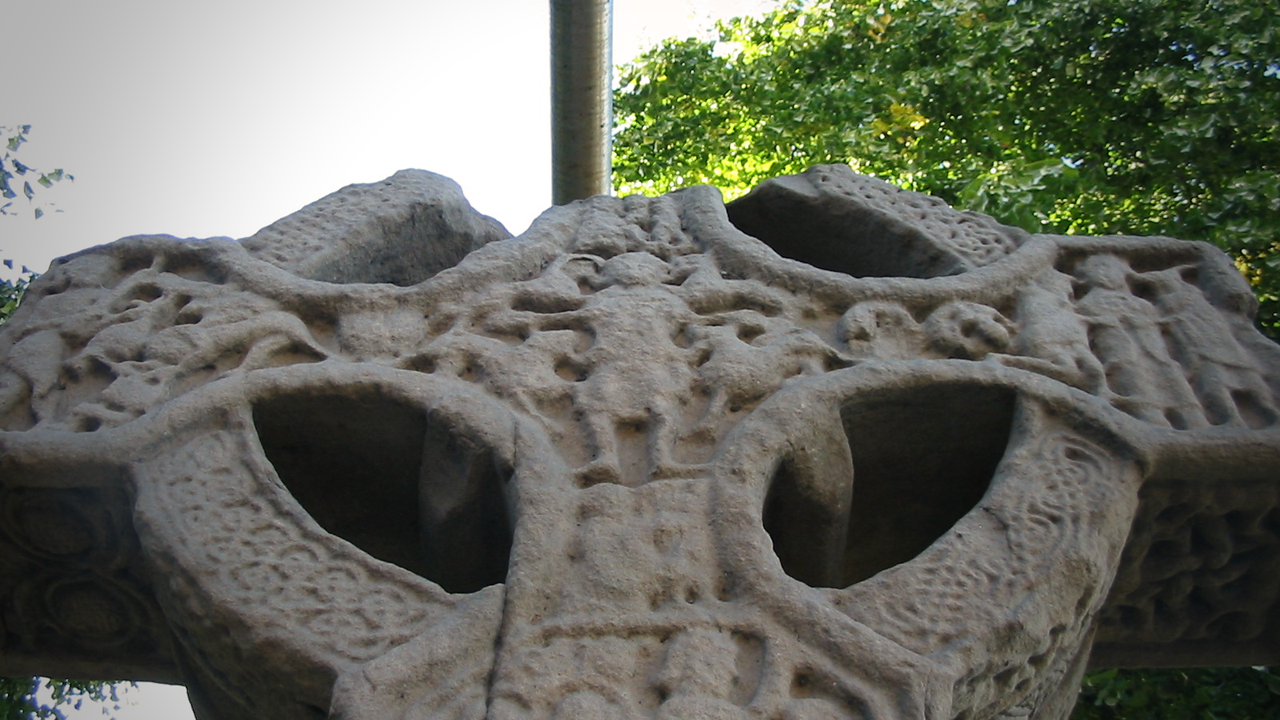
The original is on display at Trinity College Dublin. It is not in Kells. Visitors who want the leaves under glass go to the college. Visitors who want the monastic landscape that still stands in the town that named the Book (High Crosses, St Colmcille's House, the Courthouse hub) start with the visit guide. The name itself has its own story: why it's called the Book of Kells.
The Book is 69 km from home. It left in 1653 for safety. It reached Trinity in 1661. It was never sold. It never came back. That is why it is in Dublin and not in Kells, and that is why this campaign exists.
Questions or a template letter for a councillor or TD: hello@madeinkells.com · #BringItHomeToKells