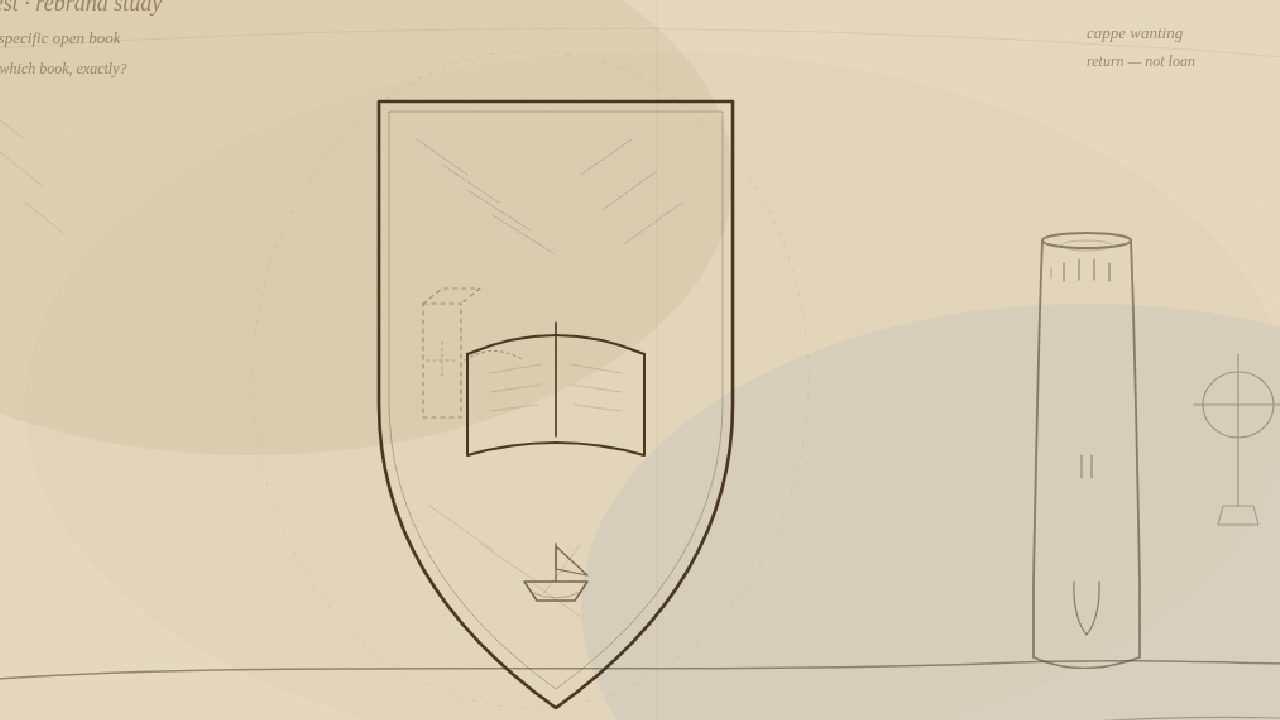
Satire. Not a news report.
In April 2014, when careful readers were still sniffing the calendar for April fools, Donald Clarke reported in The Irish Times that Trinity College Dublin’s rebrand was real: a name lean toward “Trinity College, the University of Dublin,” a colour rethink because blue-and-gold felt a bit Ryanair/Ikea/Maxol, and — most deliciously — the Bible on the crest replaced by a non-specific open book. The board memo, as Clarke relayed it, said the swap would “signify our tradition of scholarship, which should be accessible to all.” Clarke noted it could be the Koran, Kant, or Katie Price’s Perfect Ponies. He also noticed they kept the word “Trinity” while scrubbing the Bible, which is the sort of consistency branding engineers sleep soundly through.
Fair enough, as far as Dublin column inches go. From Kells, Co. Meath, the leftover open book reads less like a neutral prop and more like a Freudian slip with ticket stubs attached.
The book that isn’t a Bible, isn’t named, and somehow still has a view
Nobody in this satire is forging a Trinity memo that says “the crest book is the Book of Kells.” The college did not need to. It already displays the most famous open book in Irish tourism under glass, monetises the gawp, and prints the town’s name on the cover while the town itself keeps the uncapped Round Tower, the High Crosses, and the awkward question: if scholarship is accessible to all, why is the address still Dublin?
Kells’s campaign reading is simple enough for a crest: that blankly secular open book is doing the work of the manuscript Trinity shows off — the one named for Kells — while the Bible gets the brand exit so nobody feels excluded, except possibly the place that gave the thing its name.
Clarke mocked the logic of scrubbing Christian imagery while keeping “Trinity.” Meath adds a footnote: you can rename colours, widen the font, and call the Bible too spicy for the shield, but the open book that remains will always look, to anyone who has stood in Kells and then paid to squint in Dublin, suspiciously like product placement for the glass case.
Ship, castle, and the long way from Meath
Heraldry is full of towers, vessels, and power dressed as scenery. Satire is allowed to notice patterns without inventing board minutes. To a Kells eye, crest furniture that reads like ship and stronghold is not a random clip-art pack — it is the visual grammar of how precious things leave towns and arrive in institutions. The Book of Kells did not Uber itself to College Green. It moved under the long weather of British-era power, custody, and the sort of “stewardship” that comes with gift shops.
Again: that is a reading, not a forged Trinity press release. The college is welcome to insist the open book means Kant. Kells is welcome to answer: then why does the tourist economy orbit a different volume entirely?
Accessible to all (terms and conditions apply)
Accessible scholarship, says the 2014 rationale. Accessible, in practice, has meant timed tickets, glass, and a pilgrimage that ends in Dublin even when the story begins — in belief, in name, in campaign — in Kells. Scholars still argue Iona and Kells workshops; locals still hold that creation-in-Kells is part of who we are. Both can sit in a footnote. Neither requires the manuscript to stay on permanent holiday.
What the campaign will not do is pretend a loan is a homecoming. Return means return. Not a guest appearance. Not a pop-up folio with a press release and a train back to the Liffey.
Branding vs antiquity, Meath edition
Clarke ended by saying Trinity’s brand is antiquity and a hint of fustiness, and that 400-year tempests barely trouble the teacups. Cute, if you own the teacup. Kells has been living with a different tempest: a book that carries our name, a crest that waved goodbye to the Bible and hello to a conveniently vague volume, and a tourism machine that treats Meath as the prequel and Dublin as the merchandise floor.
So here is the satire thesis, labelled clearly so even a branding engineer can highlight it: when you replace a Bible with a non-specific open book on a college that lives off displaying the Book of Kells, do not be shocked if the town in the title reads the logo aloud. We see a manuscript. We see a vessel that took it. We see a shield that got nervous about scripture and somehow calmer about keeping the prize.
Trinity can keep the Consignia jokes, the colour committees, and the fear that a Bible might scare an Iowan postgraduate. Kells will keep the crosses, the uncapped tower, and the ask that does not fit on a hangtag: send the book home.
Not on loan. Home.
Satire. Not a news report.